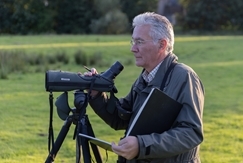
 For wildlife artist and guide Ashley Boon, the four species featured in this year's GWCT Christmas cards are far more than artistic subjects. They are birds he has spent years observing across the landscapes he calls home, from the grouse moors of northern England to the high mountains of Scotland.
The paintings, featuring curlew, black grouse, red grouse and ptarmigan, reflect a lifetime spent watching wildlife, sketchbook and telescope in hand, learning not just how these birds look, but how they behave and fit into the landscapes around them.
Capturing more than an image
Ashley spends much of the year travelling the world as a wildlife guide, yet many of his favourite subjects remain much closer to home. Living near the Scottish border, he regularly visits local moorland sites where encounters with curlew and grouse have become part of his daily life.
“There’s one particular place – a tar road up on the moor which I jokingly call ‘my office’”
His artwork begins long before he enters the studio. Time spent observing, sketching and photographing wildlife in the field allows him to build an understanding of the species he paints and the environments they inhabit.
"What I hope I portray in my work is an intimate view of the creature that I'm trying to depict."
That means paying attention to behaviour as much as appearance, whether it's a curlew calling across the moor, a black grouse displaying at dawn or a red grouse standing watch from a tussock of heather.
Translating a wildlife encounter into paint
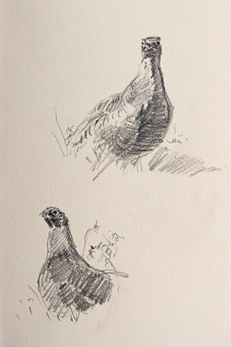 Field sketches, notes and photographs all make their way back to Ashley's studio, where they form the foundations of each painting. But the finished artwork is built from more than visual reference material.
The challenge, he says, is translating the atmosphere of an encounter into paint. The sounds, weather, landscape and emotions attached to a particular moment all influence the final piece.
For the ptarmigan painting, inspiration came after a memorable two days in the Cairngorms, where he encountered the species after a succession of capercaillie, red and black grouse sightings lower down the mountain. The experience stayed with him long after he returned home. With their distinctive feather-covered feet, which Ashley jokingly describes as looking like "après-ski boots", the birds eventually became the subject of one of the images he donated to the Trust.
Ashleys works rarely directly depict the whole landscape around the individual he’s painted, and yet he still manages to capture the sense that it is placed within its natural habitat and tells part of the story of its life there through its characterful position on the canvas.
Why these species matter
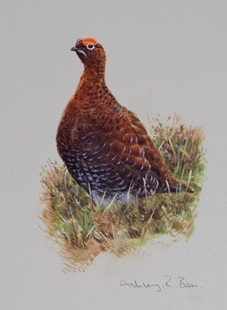 Having guided people in some of the world's most celebrated wildlife destinations, Ashley has no shortage of remarkable encounters to draw upon. Fresh from his 25th safari to Botswana and with over 850 bird species logged as of this year, it would be easy to assume his attention lies overseas. Yet Britain's wildlife still holds a special place in his affections.
“Seriously, if you don’t have time for long tailed tits – have a look at yourself!”
Black grouse especially, represent one of the world’s, let alone this country's greatest wildlife spectacles. Years spent watching their spring displays have left a lasting impression, while curlew carry an additional emotional significance because of their well-documented declines.
"The call of a displaying curlew is magical. It's the sound of a new season and it's utterly beautiful."
For Ashley, these species are inseparable from the landscapes they inhabit. A morning spent looking for grouse quickly becomes a lesson in the wider richness of the uplands, from lapwing and golden plover to countless other species sharing the same habitat.
That interconnectedness is part of what makes conserving these landscapes so important.
A shared connection with GWCT
Ashley has supported GWCT for many years and sees strong parallels between the Trust's work and his own approach to wildlife.
Both are rooted in spending time outdoors, building understanding through direct observation and developing a deeper appreciation for how species interact with their environment. He is particularly supportive of GWCT's emphasis on practical conservation underpinned by long-term science.
He describes the Trust as an organisation that combines a genuine passion for wildlife with the evidence needed to make informed conservation decisions.
“I am so thankful that we have the GWCT in the UK, an organisation whose sound scientific work is driven by the love and concern for the wildlife that I care about so deeply.”
Supporting conservation through art
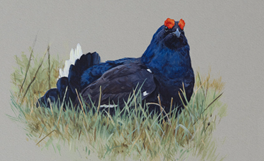 By donating these images for GWCT's Christmas card collection, Ashley hopes to help celebrate some of Britain's most treasured species while supporting the research and conservation work that helps secure their future.
In many ways, the connection between Ashley's artwork and GWCT's science comes down to the same principle: boots on the ground. Whether collecting long-term data, managing wildlife habitats or quietly watching birds on a windswept moor, meaningful conservation begins with people taking the time to understand the natural world. These paintings are a reflection of that connection, and of the species and landscapes that inspire it.
His final message is one of gratitude.
"Thank you GWCT for looking after the things that I love. I'm glad to be part of it all."