Key points:
- Just over 3,000 wader nests were included in the analysis. The study examined four species: curlew, lapwing, redshank and oystercatcher.
- The effects of woodland proximity on nest predation varied with woodland type and wader species: lapwing nest predation increased with proximity to coniferous woodland, while oystercatcher nest survival was greater near wooded features.
- Curlews showed some increased predation near hedgerows and tree lines, but evidence was limited, while redshanks showed no clear link between nest survival and woodland features.
- Current English guidance recommends a 1 km buffer between new woodland and important wader habitat. For lapwing, predation risk remained above 50% at 1 km from conifer woodland, below the 50% threshold required for population growth.
Background
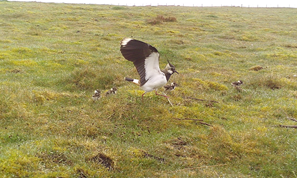 Many of the UK's breeding waders, such as curlew, lapwing, redshank and oystercatcher, have declined dramatically in recent decades. Conservation efforts have focused on improving the quality of open habitats where these birds nest, but nest predation remains a major cause of breeding failure.
At the same time, there is increasing interest in creating new woodlands to help tackle the climate and biodiversity crises. While woodland creation can benefit many species, it may have unintended consequences for wildlife that depends on open landscapes. Ground-nesting waders can be particularly vulnerable because woodlands often provide habitat, shelter or travel routes for predators such as foxes, crows and other nest predators.
Previous research has shown that wader populations are often less abundant near woodland edges. This pattern is known as an "edge effect". One explanation is that nests close to woodland suffer higher rates of predation, reducing breeding success and making those areas less suitable for waders. However, evidence is mixed, and it is not clear whether all wader species respond in the same way, whether different types of woodland have different effects, or how far any impacts extend into surrounding open habitat.
Current guidance in England recommends keeping new woodland at least 1 km away from important breeding wader habitat. However, this recommendation is based on limited evidence, and there is a need for a better understanding of how woodland characteristics influence nest survival.
This study therefore used data from around 3,000 nests across the UK to investigate whether the risk of nest predation is affected by the distance to woodland, the amount of woodland in the surrounding landscape, and whether the woodland is broadleaved or coniferous. The aim was to provide stronger evidence to help balance woodland creation with the conservation of declining wader populations.
This research is particularly important because measures designed to help one group of species, such as woodland wildlife, can sometimes have unintended impacts on species that rely on open habitats. Understanding these trade-offs is essential for making informed conservation and land-use decisions.
What they did
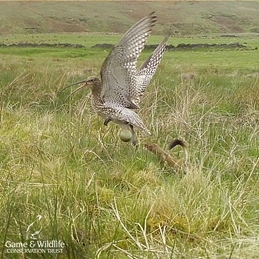 The researchers used information from just over 3,000 nests belonging to four breeding wader species: Eurasian curlew, northern lapwing, common redshank and Eurasian oystercatcher, collected from sites across the UK. They focused on whether or not nests were predated during the breeding season.
For each nest, the team measured its location in relation to nearby woodland and other woody features in the landscape. They looked at how close nests were to different types of woodland, including coniferous and broadleaved woods, as well as linear features such as hedgerows and tree lines. They also measured how much woodland was present in the surrounding area.
The researchers then used statistical models to test whether the likelihood of a nest being predated was related to the amount of woodland nearby, the distance from woodland, or the type of woodland present. They analysed each wader species separately to determine whether different species responded differently to these landscape features.
By comparing nest outcomes across a wide range of landscapes, the study aimed to identify when and where woodland may increase the risk of nest predation. The findings were then used to assess whether current recommendations for woodland creation near important breeding wader habitat are likely to provide sufficient protection for these declining bird populations.
What they found
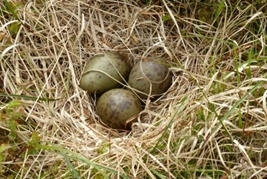 The results showed that the relationship between woodland features and nest predation differed between wader species and woodland type. There was no single pattern that applied to all birds, highlighting the importance of considering each species separately when planning woodland creation and habitat management.
For lapwing, nests located closer to coniferous woodland were more likely to be predated. The researchers found that predation risk was greatest near to conifer wood, and decreased with increasing distance, but the effect was still evident at distances of up to 1 km. The researchers estimated that predation risk remained above the 50% threshold associated with declining wader populations, even at this distance. Because this estimate considered only predation and not nests lost to other causes, overall nest failure rates would be expected to be higher, suggesting that current guidance may not always provide sufficient protection.
For curlew, there was some evidence that nests closer to woody linear features, such as hedgerows and tree lines, experienced higher predation rates. However, the number of curlew nests available for analysis was relatively small, meaning the researchers were less confident about this result.
For redshank, the researchers found no clear relationship between nest survival and any measure of woodland proximity, woodland type or woodland extent, whereas oyster catcher nests located closer to wooded features showed higher nest survival.
Across all four species, the team found little evidence that the overall amount of woodland in the surrounding landscape was associated with increased predation risk. Instead, the distance to woodland and the type of woodland appeared to be more important than the total area of woodland present.
What this means
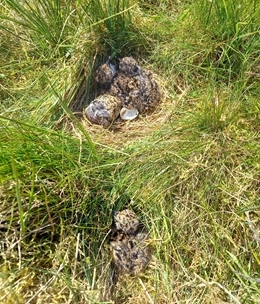 This study shows that woodland creation and wader conservation need to be carefully planned together. While new woodland can provide important benefits for wildlife, carbon storage and landscape restoration, it may not be suitable in all locations, particularly where vulnerable breeding wader populations are present.
The findings suggest that the effects of woodland features in the landscape on predation depend on both the species of wader and the type of woodland involved. Lapwing appeared particularly sensitive to nearby conifer woodland, whereas redshank showed no clear response and oystercatcher nests sometimes fared better near wooded features. This means that a "one-size-fits-all" approach is unlikely to be effective.
The study also indicates that the position of woodland within the landscape may be more important than the total amount of woodland. Rather than focusing only on how much woodland is created, planners may need to consider where it is planted, what type of woodland is established, and which wader species use the surrounding land.
Importantly, the results suggest that the current recommendation to maintain a 1 km buffer between new woodland and important breeding wader habitat may not always be enough to avoid increased nest predation associated with woodland, particularly for lapwing near conifer plantations. This highlights the need for further research and careful assessment when woodland creation is proposed in areas that support breeding waders.
Overall, the study provides evidence that conservation decisions should consider the needs of different species rather than treating all waders alike. By understanding how woodland mediated predation and open habitats interact, land managers can make more informed decisions that help both woodland wildlife and declining populations of waders.
Read the original report
Predation-mediated edge effects on wader nests in rural landscapes vary between species, and with distance to woodland and woodland type - ScienceDirect
Photo credits: Holly Appleby