By Dr Chris Stoate, Research Consultant, Allerton Project
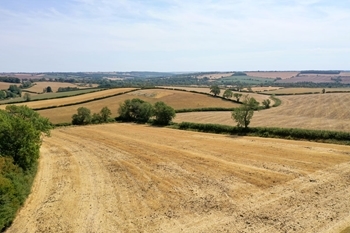 Summer 2026 was another record-breaker. The repeated reporting of broken climate records can give the impression that we are merely watching statistics accumulate, rather than witnessing serious consequences.
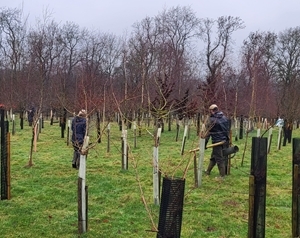
On the farm at home, I spent around 20 hours each week watering recently planted trees and hedge plants to keep as many of them alive as possible. Countless recently planted trees across the country will have died because of the drought. They were planted for the benefits they bring to landscapes and to livestock, to provide habitat for wildlife, and increasingly as part of corporate and individual efforts to offset greenhouse gas emissions. Those trees will sequester no carbon and deliver none of the long-term wildlife benefits for which they were planted. Indeed, their establishment will already have involved carbon emissions associated with growing, transporting and planting them, meaning that the climate cost is incurred without any of the anticipated carbon benefit.
The government’s statutory target is to increase England’s tree cover to 16.5% of the land area by 2050. The actual area planted each year falls far short of what is needed to meet this target, even before the increasing failure rate is taken into consideration. The reality is that the advice must now be not to plant more trees than can be kept alive during droughts in the early years. That means even less carbon sequestration and an even more urgent need to reduce the use of fossil fuels.
The increasing severity of winter floods can be addressed in multiple ways beyond traditional engineered flood defences. At the catchment scale, trees are an important part of the mix. So are permeable timber barriers created in watercourses to slow the flow. Steps taken to improve agricultural soils can increase the rate at which they can soak up and hold water during storms, reducing flood risk downstream.
Allerton Project research with the Freshwater Habitats Trust and York University in the long-running Water Friendly Farming project showed that introducing 30 leaky timber dams into a 1,000-hectare headwater catchment reduced peak flow at the base of the headwater by nearly 15%. That’s potentially enough to make a difference to valuable assets and infrastructure that are susceptible to flood damage.
But this encouraging result is for a one in two year storm event. What we are more concerned about is the one in 30 or 40 year storm events whose frequency is increasing beyond what is implied by these terms. For these more intense storms, the leaky timber dams make little or no difference.
 Improving the permeability of agricultural soils reduces runoff and flood risk if applied at the catchment scale. Allerton Project researchers working at Halstead Hill Farm have identified a role for deep-rooting agricultural grass cultivars in improving water infiltration rates during storm events, as well as contributing to drought resistance (work that has just been published in Conservation Land Management). And at the Allerton Project research and demonstration farm, water infiltration rates have been found to be up to ten times higher in grass beetle banks across fields than in the adjacent cropped land. But as the winter progresses, the rain continues and the soils become more saturated, the rate at which they can buffer flow diminishes and there is no difference in infiltration rates between the grass strips and the surrounding land. The water has to go somewhere.
Where management practices to manage water occupy agricultural land. This can result in a loss of food production at a time when yields are falling because of drought and waterlogged soils, and imports of food into the country are becoming less secure. But these approaches have an important role to play in at least delaying and reducing the frequency of damaging floods, and some of them can be integrated into farming systems in a way that complements food production. Agroforestry, integrating trees into productive land use, is an example.
The importance of generating robust long-term evidence in working landscapes is increasingly recognised. The Water Friendly Farming project has become the template for a major new national initiative, due to be launched next week, bringing together water companies and research partners to examine these issues at a broader scale. This reflects growing recognition that practical, long-term monitoring is essential if we are to understand both the benefits and the limitations of climate adaptation measures.
Nevertheless, we need to recognise that there is a limit to which we can protect ourselves from the effects of climate change, whether it is drought or flooding. That is not a message that people want to hear. Funders like leaky timber dams and tree planting because they are clearly visible and relatively easily costed, but we need to be thinking much more beyond the initial setup to ongoing maintenance and accepting the limitations of their ultimate efficacy. Most importantly, these measures must not distract us from the fundamental and urgent need to reduce fossil fuel use.
When it comes to communicating climate change issues, getting the balance right between positivity and reality is complicated and challenging. All of these climate change adaptation approaches, and many others, are important, but we are beyond the stage where they alone will be sufficient to protect us from the predicted impacts we are now starting to experience. This is a much more difficult story to tell, and to read, than one about breaking records. But that does not mean it should not be told.