By Eleanor Williams, Media & Communications Manager
Held at Scone Palace since 1989, the GWCT Scottish Game Fair has grown to become Scotland's largest celebration of the countryside, attracting thousands of visitors every summer. This year's event proved another outstanding success, with record visitor numbers enjoying three days of countryside pursuits, demonstrations, shopping, food, entertainment and, at the heart of it all, the latest science and conservation from the Game & Wildlife Conservation Trust.
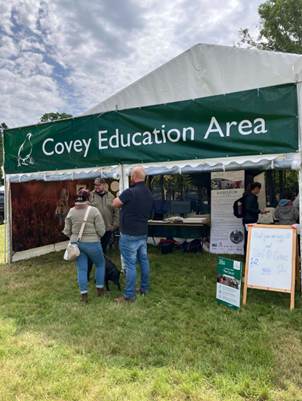 Positioned beside the Main Arena, the GWCT Scotland stand welcomed thousands of visitors keen to discover how practical, evidence-led conservation is helping to shape the future of Scotland's wildlife and landscapes. Throughout the weekend, our advisers and researchers were on hand to answer questions from farmers, gamekeepers, land managers and members of the public, discussing everything from red grouse breeding and moorland management to Atlantic salmon conservation, farmland biodiversity and sustainable lowland gamebird management.
Interactive displays brought our work to life, with pens housing pheasants and red-legged partridges demonstrating best practice in released gamebird management, while exhibits on pollinators highlighted the importance of insects within healthy ecosystems. Younger visitors also enjoyed a range of hands-on activities, including clay wildlife modelling and egg painting.
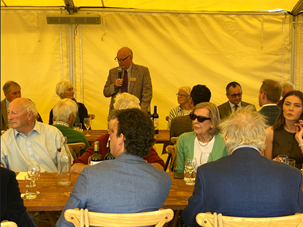
Away from the main display, the Fair also provided an invaluable opportunity to thank the people who support our work. Throughout the weekend we welcomed donors, sponsors, land managers and gamekeepers to a series of lunches and receptions, while government representatives and policy makers were given guided tours of the stand to showcase the breadth of GWCT's research and practical conservation work. Meanwhile, GWCT supporters enjoyed complimentary entry to the Fair and the hospitality of the Members' Marquee throughout the weekend.
One of the most popular features of the stand was the Listen to the Land programme, where leading conservationists came together to discuss some of Scotland's most pressing wildlife and land management challenges.
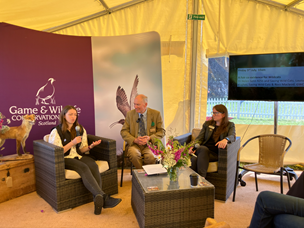 The programme opened with a discussion on the Scottish wildcat recovery project. GWCT Scotland's Head of Policy, Ross MacLeod, was joined by Dr Helen Senn of the Royal Zoological Society of Scotland and Louise Hughes from Saving Wildcats to discuss A Fair Co-existence for Wildcats. The panel explored the challenge of restoring one of Britain's rarest mammals while balancing the needs of farming and gamebird management, highlighting how collaboration between conservation organisations and land managers is helping to develop practical solutions that support both wildlife recovery and rural livelihoods.
Later on Friday, Headkeeper Josh Burton of Abercairny Estate joined GWCT Farmland Biodiversity Advisor Fiona Torrance to share the remarkable story behind a successful grey partridge reintroduction project. Their discussion demonstrated how habitat management, predator control and sympathetic farming work together as the "three-legged stool" of successful conservation, proving that biodiversity can flourish where practical land management is underpinned by good science.
On Saturday, another lively discussion focused on sustainable gamebird management. Chaired by GWCT Director of Advisory Roger Draycott, the panel brought together representatives from RSPB Scotland, NatureScot, BASC and Scottish Land & Estates to examine the latest research into gamebird releasing. Drawing on current scientific evidence, the discussion explored the ecological impacts of releasing, considered practical measures to minimise environmental effects and demonstrated the value of constructive debate between organisations with differing perspectives, united by a shared interest in ensuring management remains both practical and environmentally sustainable.
 The final session turned to landscape-scale conservation, with GWCT fisheries ecologist Will Beaumont and Clare Shade-Poulsen from Forth Rivers Trust discussing the growing importance of farmer clusters and catchment partnerships. Their talk highlighted how collaboration between farmers, estates, river trusts and conservation organisations is improving water quality, restoring habitats and delivering tangible benefits for species such as Atlantic salmon across Scotland's river catchments.
As another successful Scottish Game Fair drew to a close, the event once again demonstrated the vital role that science, partnership working and practical conservation play in shaping Scotland's countryside. From engaging young people with wildlife to tackling some of the biggest challenges facing biodiversity, the weekend celebrated the people, research and collaboration that continue to make the Game & Wildlife Conservation Trust a leading voice for conservation in Scotland.