by Ben Jones, Farm Manager, Allerton Project
Record OSR harvest
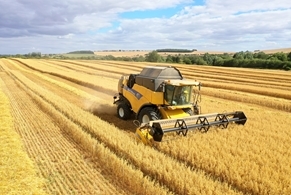 Due to this summer’s extreme weather, cereals were harvested three weeks earlier than you would normally expect. This resulted in a yield loss of around 10% to 30% on most crops. Having said that, the highlight of the harvest was the oil seed rape (OSR). It was the first to be combined and it proved a very good crop for drought conditions because it's so deep rooting and finished its growth stage before the ground dried out. As a result, we averaged 4.5 tonnes per hectare across 32 hectares which is the highest yield ever at Allerton. The previous record was around 4.2 tonnes.
Easier linseed
This year we grew winter linseed because we wanted an alternative to OSR in case we ever run into difficulties with flea beetle again. It’s the first time I’ve grown it and it hasn’t been a crop at Allerton for many years. We averaged 1.8 tonnes per hectare which was disappointing as you’d normally hope to get 2.5 per hectare, but we were trialling it, so we’ll do it again. Last year we drilled the linseed in the second week of September, but this year I got it in before the end of August in the hope of better yields next year. Traditionally, it's very difficult to combine because it wraps around everything and its tough, fibrous stems are hard to cut, but people always say try to harvest linseed on a hot sunny day and because we had such a hot dry summer, it was no trouble at all.
Wheat had great potential early on
After that we got to the wheats, which looked really good in late spring and early summer, but lack of grain fill due to the drought meant they never reached their potential. The farm average ended up being around 7.8 tonnes per hectare, which was just below the 30-year average for Allerton (around 8.2 tonnes per hectare). Wheat was followed by winter beans, which were very poor. They suffered exceptionally badly in the drought and from heat stress and they’d been affected by a disease called chocolate spot early on. They ended up yielding 2.1 tonnes per hectare, which is a very poor result. Beans are great for soil health and they're a good diverse crop to have in your rotation, but you only get a decent harvest every five years.
Oats and barley better than expected
So then we moved to spring oats and barley, and these were probably better than expected given that there was so little rain. Spring barley averaged 5.8 tonnes per hectare and spring oats 5 tonnes per hectare. I put that down to the fact that they went in in mid-March and established pretty quickly with plenty of moisture and good soil temperature at the time.
General reflections
I think the overall conclusion would be that the harvest could have been a record breaker but turned out average with the exception of the OSR. There are reports of the national average being around 6.5 tonnes per hectare, so we’re well in excess of that, but we did get some rain in early summer when the East of England didn’t, and we are on heavier soils. As well as the lack of moisture I think it’s the intensity of the heat which causes the plants to shut down and you just don't get the grain fill. Around flowering we had 5 days of 35° in a row and the crops never fully recovered.
Looking ahead we are going to grow fewer beans, which will mean using more nitrogen, which isn’t ideal. I think a lot of people are going to move back into OSR because that’s been yielding extremely well and the price is strong. We sold ours at just under £500 a tonne and it’s by far our most profitable crop. We’ll get £1,650 per hectare gross margin in contrast to winter beans which were £200 gross margin.
To end on a positive, it was the easiest harvest I’ve ever had because we didn’t have to wait for a dry spell, we got perfect conditions every day!