By Beth Glover, Placement Student, Allerton Project
As a placement student joining the Allerton Project's research team, I have quickly discovered that there is far more happening here than first meets the eye. I would like to share a newcomer's perspective on the work taking place and the unique opportunities on site.
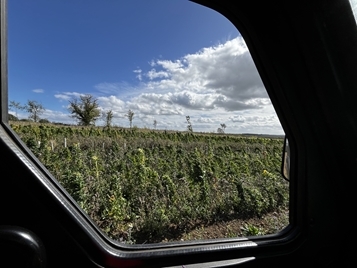 At its heart, the Allerton Project brings together farming, research and conservation, using each to inform and strengthen the others. The team works directly with the land to develop and demonstrate sustainable and regenerative farming practices, while also carrying out research that helps farmers, policymakers and conservationists make informed decisions. What has struck me most during my first two weeks is not only the dedication and ability of the staff, but also their commitment to sharing knowledge and practical findings so that others can benefit from the work being carried out here.
Research in Practice
During my first two weeks, I've already had the opportunity to see several different sides of the project, from ecological research in the field to discussions about the future resilience of British agriculture. I have begun work ona project investigating the effectiveness of beetle banks, and have also supported the research team in setting and monitoring moth traps, providing hands-on experience of ecological monitoring in practice.
The team’s wide range of expertise is reflected in the variety of projects carried out on-site and across surrounding farms. Research involves far more than simply collecting data. Considerable planning and collaboration are needed to ensure studies work alongside the farm’s operational needs and prove the impact of sustainable farming practises. This aspect of the project highlights how ecological research can help us better understand the role that habitats such as beetle banks play in supporting beneficial insects and enhancing biodiversity across farmland.
Seeing the Bigger Picture
Looking beyond my own project, the trials tour provided a valuable insight into the breadth of work taking place across the farm. It was striking to see the number of long-term experiments and demonstrations running simultaneously, all aiming to address different aspects of sustainable farming and wildlife conservation. The ability to run long-term trials is one of the Allerton Project's greatest strengths, as these are increasingly rare and valuable. Seeing these projects in person helped me understand how research findings can be directly linked to practical farm management decisions.
These trials not only test the science behind different farming practices but also assess new products and approaches under real farm conditions. Through carefully designed experiments and scientific monitoring, the Allerton Project can evaluate innovations and provide independent, evidence-based insights. This allows the project to explore ideas and take risks that individual farmers may not be able to justify themselves, before sharing the findings with the wider farming community. One of my strongest impressions so far has been the willingness of staff to communicate what they learn and ensure that this knowledge reaches farmers, land managers and others interested in sustainable land use.
Connecting Research and Farming
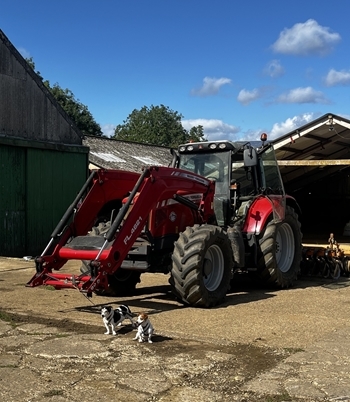 Alongside fieldwork and research activities, I also attended DEFRA's Introduction to Agriculture training, delivered by the Allerton Project as part of its unique role in education and knowledge exchange. As someone new to the sector, this provided valuable context for understanding the challenges and opportunities facing modern agriculture and those working to support farmers and rural communities. The session highlighted the balance farmers must strike between food production, environmental stewardship and economic viability. Although I have the scientific background to approach my role, it was key to see how the research I will contribute to can help address these challenges while creating opportunities for a more sustainable and resilient future for agriculture.
Not only does the Allerton Project play an important role in introducing people to the world of agriculture, but it also works to bridge the gap between farmers and scientists. During my first weeks here, I attended a Roads to Resilience event, which brought farmers together to learn from experts and share ideas on the practices, technologies and equipment available to help strengthen the resilience of their businesses.
This session focused on resource-use efficiency, although the programme also covers topics such as farm economics and wider sector challenges. The overall aim is to support the long-term viability of farming businesses, helping farmers build more resilient enterprises and secure livelihoods in an increasingly challenging environment.
What stood out to me was the value of bringing together farmers, researchers and industry experts in the same room. These discussions help ensure that scientific research remains relevant to real-world challenges while giving farmers access to the latest evidence, ideas and practical solutions.
Reflections
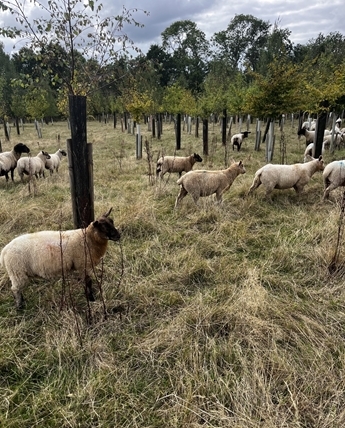 Looking back on my first few weeks, what has impressed me most is the breadth of work taking place and the sense of community. It is a place where research is put into practice, where farming and conservation work hand in hand, and where ideas can be tested for greater benefits. I can't wait to explore these concepts in more depth over the next year, and there is no better place to do it. If you ever have the chance to visit this brilliant facility, I will strongly encourage you to take it. Seeing the work firsthand gives a real appreciation of the impact the Allerton Project is having on farming, wildlife and the future of our countryside.